Ballot Measure Front Groups: The Case of the Ann Arbor Responsible Energy Coalition

Corporate front groups are notoriously tricky to identify – being secretive is kind of their thing. So how do you tell if a group or organization is really a front for corporations, or if it actually is a group of concerned citizens whose interests happen to align with big business?

For many types of front groups, getting a definitive answer can be difficult. Without a whistleblower providing concrete evidence or slip ups from the organization, we often can only speculate. But there is one type of corporate front group where getting the information needed for making a clear-cut identification is relatively easy: Ballot measure committees.

If you live in one of the 24 states that allow constituents to bypass lawmakers and submit their own petitions for a vote, then you’ve probably seen a corporate front group in the form of a ballot measure committee – especially if you live in California. Depending on the state, it may be called a ballot initiative, or ballot measure, or proposition.
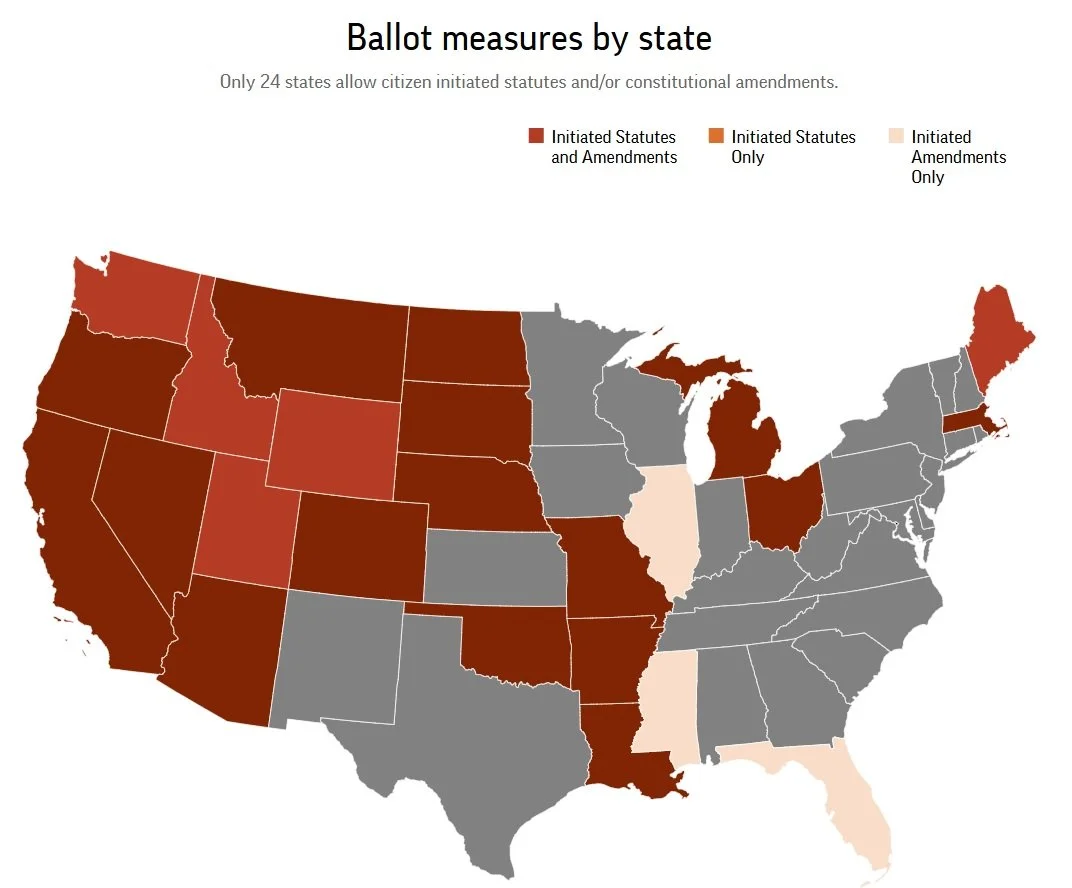
Most (if not all) states that allow ballot measures also have campaign finance rules around the creation and use of ballot measure committees – organizations that campaign for or against a proposed ballot measure. These organizations often have to file paperwork with their respective state to declare themselves as a ballot measure committee and have financial reporting responsibilities. Like political action committees (PACs), ballot measure committees have to regularly report their donors and the amount of their contributions. Luckily for us, most (if not all) states make their campaign finance databases open to the public. Although I would note that some are easier to find and are more user friendly than others.

Ballot Measure Front Groups

What makes a ballot measure committee a front for corporate interests instead of an authentic effort to oppose or support a ballot proposal?

I have an ongoing project tracking corporate front groups that take the form of ballot measure committees. In determining whether to include a committee as a front group, I use two factors: The degree to which the committee is open about its goals or purpose and how transparent it is about its funding.

Ballot measure committees operating above the board will clearly state why they are for or against a ballot proposal and will provide factual evidence in support of their views. They will also openly share who the members of their coalition are and who is funding their efforts. Ballot measure committees operating as corporate front groups do not.

One of the most extreme examples of a ballot measure corporate front group was the organization Californians for Statewide Smoking Restrictions (CSSR). This committee campaigned for the passage of 1994’s California Proposition 188, Public Smoking Ban Initiative. What made this proposition so tricky – its opponents called it a “Trojan Horse” initiative – is that had it passed, it would have actually weakened smoking bans in California, not strengthened them as the name implied. Terry Friedman, a former Democrat State Assemblyman, described Prop 188 as “the most deceptive campaign in my quarter century of close observation of local politics.”

CSSR was actually funded by the country’s top tobacco companies who spent more than $18 million on the campaign. Prop 188 would have set a state smoking ban that would pre-empt much stronger local smoking bans. Essentially, it would have allowed smoking in designated smoking areas in restaurants and employee cafeterias and would permit “smoking in private offices, and business conference rooms with occupants' consent.” Many hospitality and gaming establishments, like bars, bingo halls, racetracks, private boxes in sports facilities, and gaming clubs would have been exempt from the smoking ban. Prop 188 put forth a state-wide smoking ban that actually banned very little – a clear benefit for tobacco companies.

While not all ballot measure committees operating as a front for corporations will be quite so egregious in their use of deceitful tactics, they will generally obscure how they were formed, who is funding the operation, and will often overstate the breadth of their supporters. You’ll see a lot of statements like “we’re a group of small businesses, community members, healthcare professionals, educators, etc.” that attempt to demonstrate a broad base of support, especially from typically trusted groups, without naming specific companies. Or they may name some supporting organizations that give the impression that the group is a grassroots coalition while withholding their corporate supporters. They also may straight up lie, claiming that organizations support them when they do not.

Researching Ballot Measure Front Groups

So how do we use campaign finance databases to identify corporate front groups?

Let’s go step-by-step using an example that has recently been in the news: the Ann Arbor Responsible Energy Coalition (AAREC), an organization opposing a proposal for the City of Ann Arbor to create its own municipal electric utility running 100% on renewable energy, replacing DTE Energy.

We’ll start with AAREC’s website. The first thing to note is that the organization does not have a formal “About Us” section where they disclose who they are, which is our first red flag. If you scroll down far enough, they do have two sentences about “who we are”:

“Ann Arbor Responsible Energy Coalition brings together community members, businesses, and residents who believe there are better, faster, less risky paths to the energy future Ann Arbor wants. We’re not here to defend the status quo — we’re here because the evidence shows this proposal would set Ann Arbor back, not move it forward.”

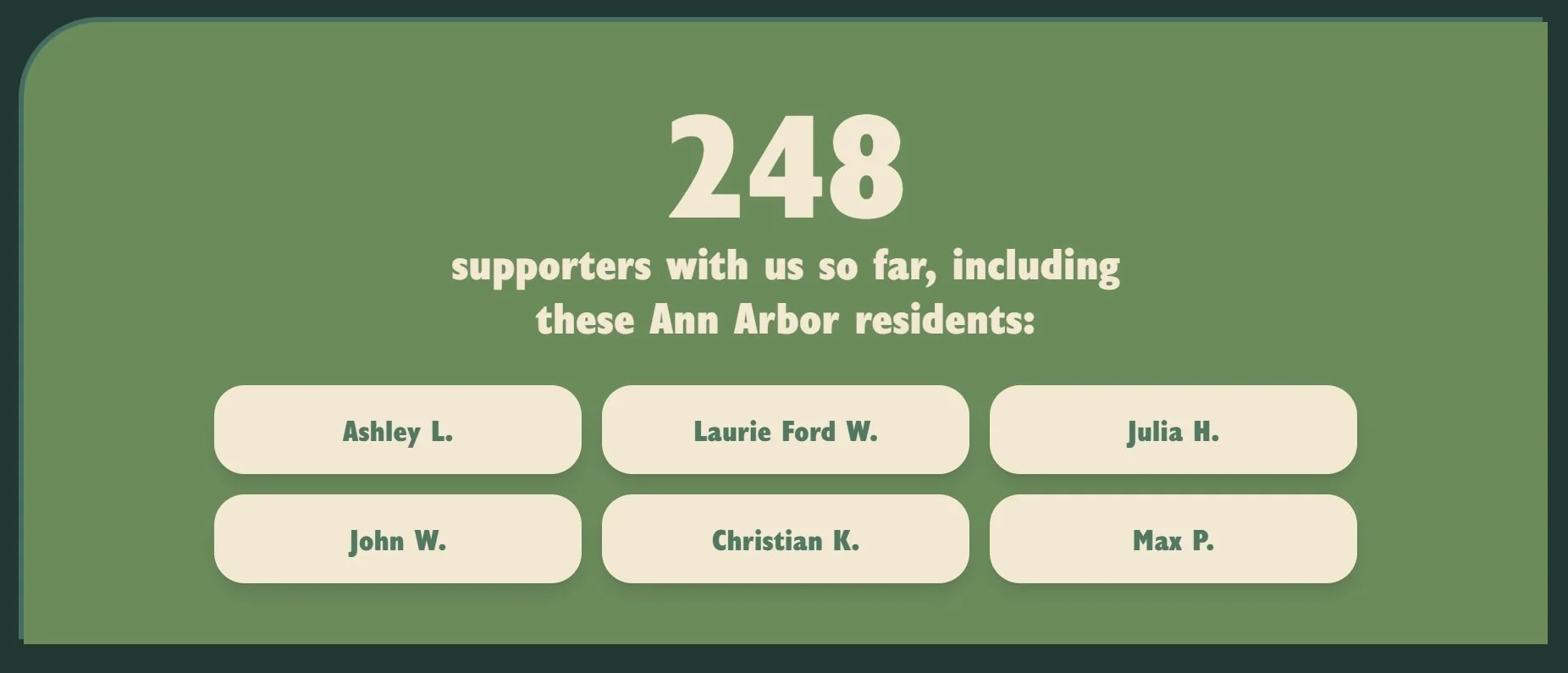
Note the very generic list of types of people and organizations in their coalition. One could argue that community members and residents are synonymous – so they’re basically claiming to bring together businesses and people who live in Ann Arbor. But not a single business is named. The site also lists a handful of purported Ann Arbor residents who are “with us so far” providing first names with last initial. I suspect that if these people are real, they are folks who signed up for the email list, which really could be anyone wanting to keep tabs on the organization – not necessarily coalition members.
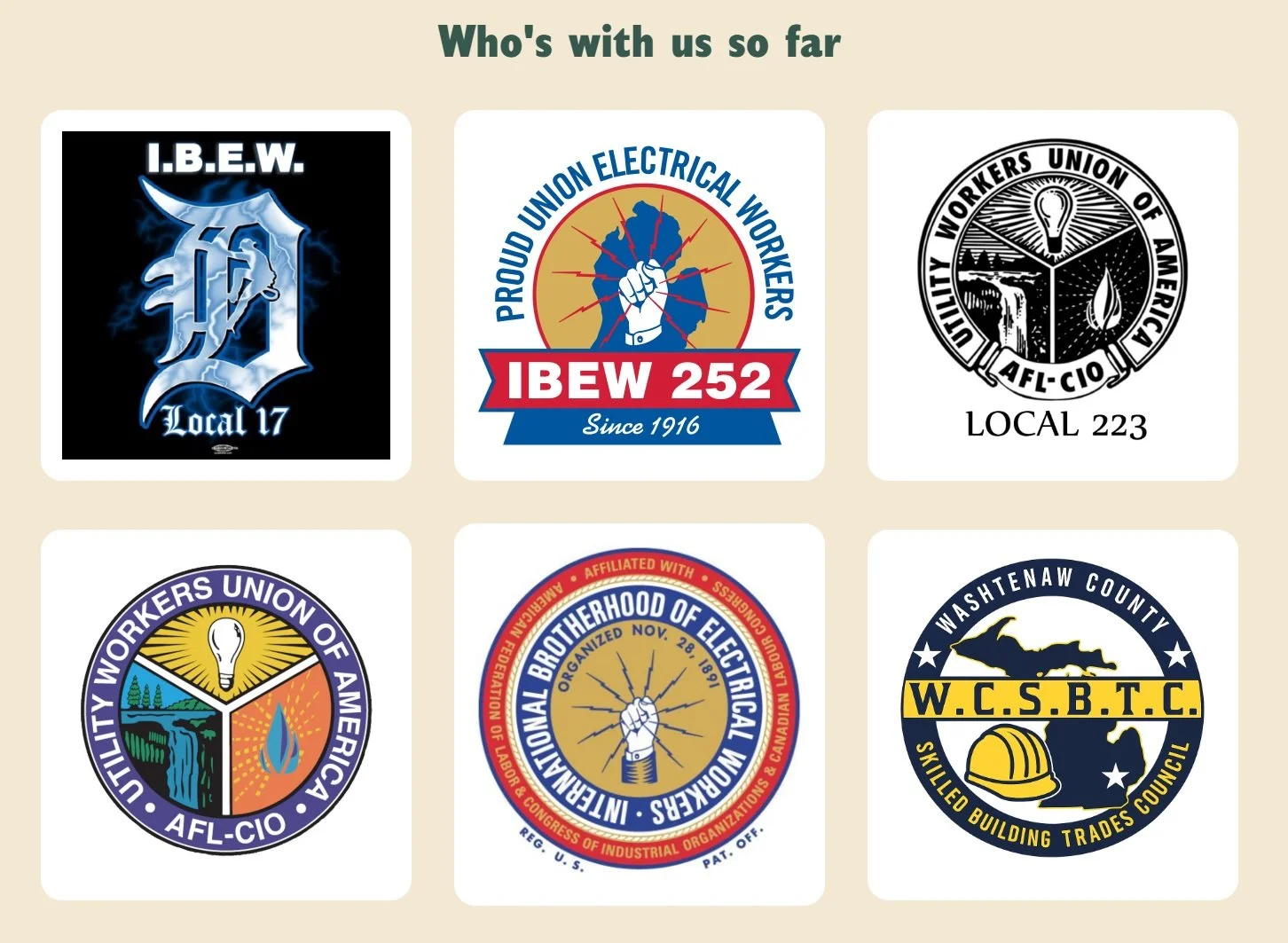
On their Join Us page, AAREC also has the logos of 6 labor unions and labor groups. Two of them are the same – they have a logo for a local chapter and its national organization. I looked at the websites and social media for I.B.E.W. Local 17 and UWUA Local 223 and did not see any statements on the proposal to create a municipal utility in Ann Arbor, nor did I see any mention of AAREC. There is also no evidence, such as joint statements, that I could find on the AAREC website that these labor organizations are AAREC members or supporters. Another red flag.  
Now that we’ve found some suspicious patterns on AAREC’s website, let’s look for a paper trail. Since this is a local (not state-wide) ballot initiative, we’ll need to go to the county’s campaign finance website. Because there is no candidate, we’ll use the Search by Committee Name option. It brings up one result and we can click on the More Info link to get more details.
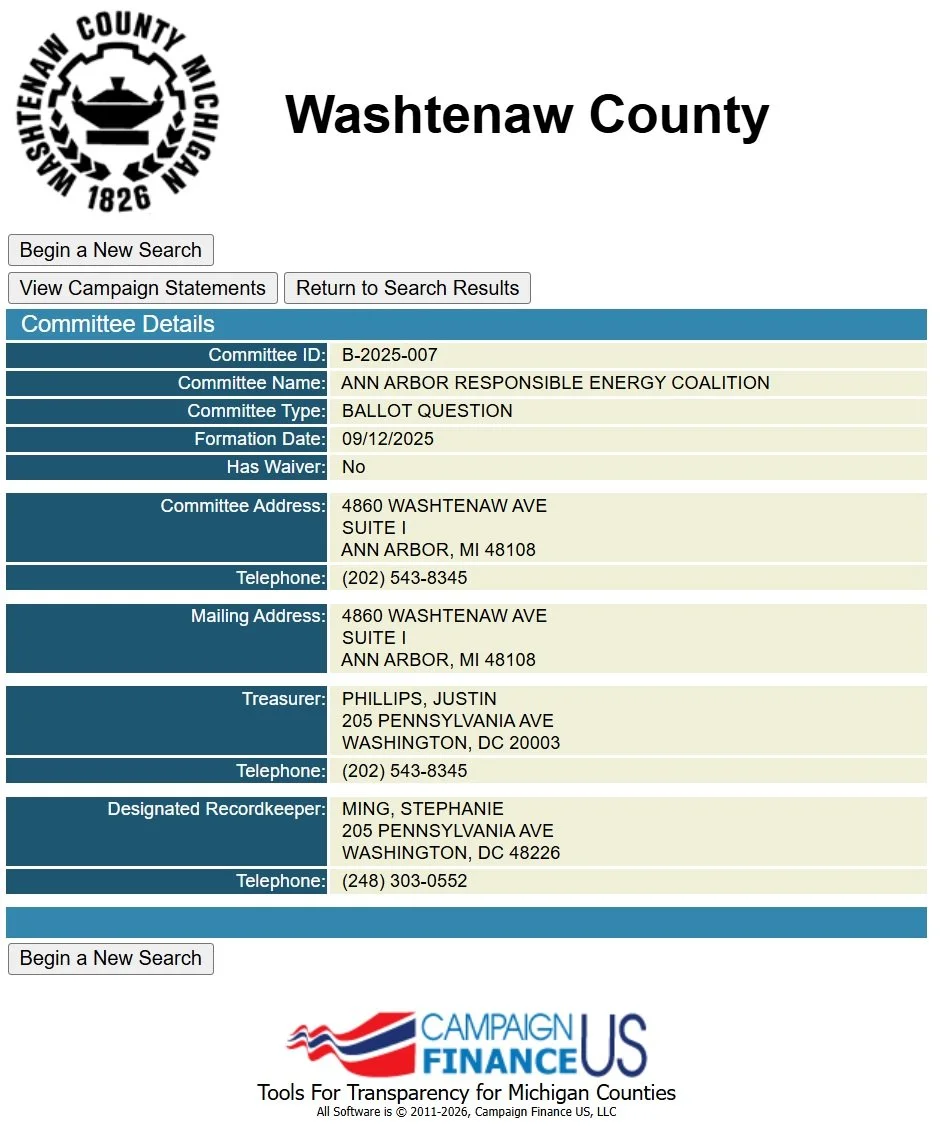
Interestingly, the listed Treasurer and Designated Recordkeeper for AAREC both work for Aristotle, a DC company that offers a variety of campaign finance, lobbying, consulting, and data analysis services for political action committees. AAREC’s currently listed address is in a strip mall. Suite I is a Goin’ Postal franchise location that offers private mailboxes. More red flags.

If we click on View Campaign Statements, it provides us links to a variety of documents that AAREC has filed with the Washtenaw County Clerk since its inception. If we start with the Statement of Organization, we find some very interesting information. The original address for AAREC is One Energy Plaza in Detroit – the headquarters of DTE Energy. The electric utility that directly stands to lose if Ann Arbor forms its own municipal utility. Furthermore, the contact email is for Daniel Mahoney, DTE Energy’s Director of Policy & Regional Affairs (if you search, you can find his LinkedIn profile, but I won’t link it here). We also see that Aristotle was involved in the creation of AAREC from the very beginning.
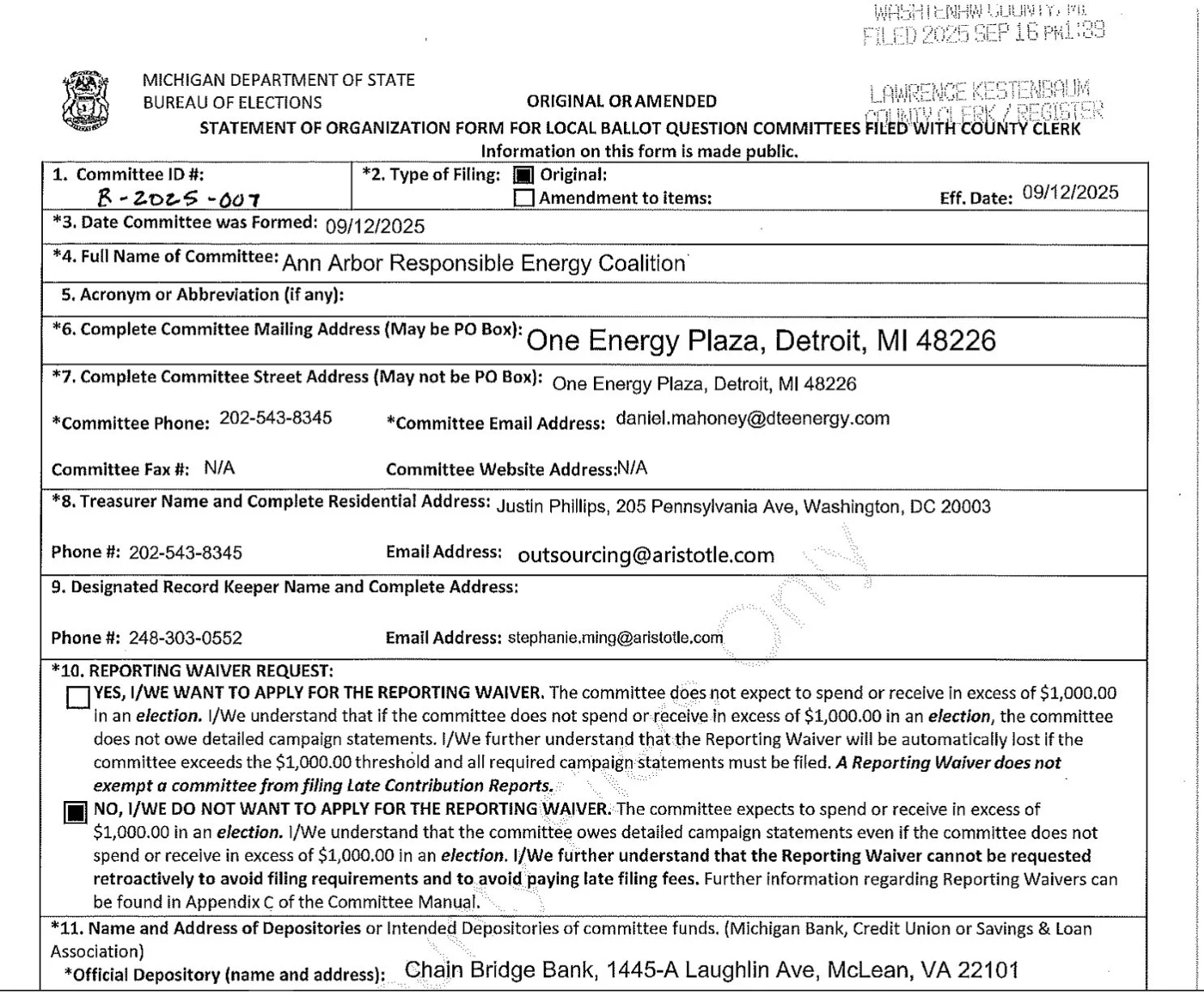
So far there are no Ann Arbor businesses or residents or community members involved in the creation or running of AAREC. A massive red flag.

Let’s look at the money trail. In its first quarterly financial statement, AAREC’s only listed financial contribution is $25,000 from the Edison Electric Institute (EEI) in Washington, DC. EEI is an industry association representing investor-owned electric utilities in the US. This means that EEI works on behalf of DTE Energy and other utilities like it. One way that companies hide their involvement in corporate front groups is by giving money to industry associations who then in turn make donations, obscuring which specific companies are involved. The statement also has a $600 in kind contribution from DTE Energy for “Employee Salary – FMV.” I suspect this means that at least one DTE Energy employee spent $600 worth of labor working for AAREC – most likely the time spent creating the organization and setting up the relationship with Aristotle. These are yet more red flags.

AAREC’s year-end statement lists additional $25,000 donations from Mark S. Helsel, Jr. of Dexter, MI and Asplundh Construction LLC of Willow Grove, PA. Mark is a V.P. at Corby Energy Services, headquartered in Detroit. The company bills itself as “your underground utility specialists.” Asplundh Construction is a company that has “partnered with utilities to deliver safe, efficient and innovative line clearance and infrastructure services” for nearly 100 years.

Still no local Ann Arbor businesses or residents – only electric utilities and the companies that contract with them.

Let’s look at the final quarterly financial statement. This is where things get really interesting. DTE Energy donated $1.8 million to AAREC, along with more than $5,000 of in kind donations, mostly salaries but also a $504 meal at Café Zola in Ann Arbor. At this point, DTE Energy is the source of more than 95% of the money being funneled to AAREC – the biggest red flag of them all.

We can also see the expenditures in this statement, which can give us an idea of what AAREC is planning. So far AAREC has spent more than $325,000 on digital media, consulting, and professional services. The bulk of that has gone to Salt Public Affairs of Portland, ME, Second Street Associates of Washington, DC, and TKO Buying of Chevy Chase, MD.

 Salt Public Affairs lists their experience successfully convincing voters to stop a statewide referendum. AAREC paid them nearly $55,000 for consulting services. AAREC also paid $150,000 to Second Street Associates, which I cannot find a website for. There’s not much information on Second Street available, but I did find an article where they were named as being contracted to work on a referendum impacting electric utilities in Maine back in 2023. I found a few mentions of canvasser jobs with Second Street, as well as signature collection efforts. Ballotpedia lists a Second Street Associates in Missouri as a petition drive management company, although I’m not sure if it’s the same organization. It will be interesting to see if there is some sort of door knocking campaign or if AAREC launches a counter ballot measure.

Finally, TKO Buying, LLC, which AAREC paid $75,000 to for digital media, appears to be another name for TKO Political, a firm that produces media campaigns for political candidates and referendums (you can see a reel of their previous work here). So it appears that AAREC could be gearing up for a media blitz.

There is more than enough evidence here to conclude that AAREC is a corporate front group for DTE Energy. We have a veritable bouquet of red flags. In fact, this is one of the more poorly hidden front groups that I’ve seen – they aren’t all so blatantly obvious. Many companies have learned to better conceal their front group funding by using third party organizations to file and manage their astroturf campaigns.

The Big Picture

With midterm elections coming up and a number of referendums and ballot initiatives in the works across the country, I would expect that there are more than a few corporate front groups popping up as ballot measure committees. If there are any groups in your area that you find suspicious, try looking up their campaign finance filings and let me know what you find. Or comment below and tell me what you’ve been seeing and I’ll take a look. Happy digging!
Wolves in Sheep’s Clothing: Industry’s Fake Environmental Organizations

In honor of Earth Day, let’s take a look at the two main ways that corporations use front groups to prevent or slow progress on environmental issues.

The first is through direct opposition to environmental efforts, usually by obstructing new laws and regulations or rolling back existing ones. The second method of environmental opposition is much more insidious. By creating front groups that look like authentic environmental organizations, corporations can manipulate both public opinion and the decisions of policymakers through the use of disinformation about their focal environmental issues.

Let’s dive deeper into each type of corporate front group strategy and look at some examples of how they operate.

Environmental Direct Opposition Front Groups

Corporate front groups that directly contest environmental laws or regulations tend to be quite open about their opposition. What they are more secretive about is who is behind their efforts and why they’re trying to influence constituents and policymakers.

One example is Citizens for Sensible Control of Acid Rain (CSCAR), which was operational between 1983 and 1991. The group was open about its opposition to legislative efforts to reduce acid rain – it ran a major campaign to stop the Acid Rain Control Act of 1986. The group spent $3,028,235 on lobbying against the bill that year (more than nine million dollars in today’s money), earning the dubious honor of having spent more money on lobbying than any other organization in 1986.

Most of that money went to a mail campaign. The organization called constituents and used a script asking them if they agreed that $100 billion was too much money for the government to be spending on addressing the issue of acid rain. With that very specific phrasing, many people said yes. The CSCAR caller would then ask if the constituent would like to send a mailgram to their Congressperson to let them know that they opposed the bill. Constituents that said yes would then be offered a pre-written letter that would be sent on their behalf – you know, because they’re surely busy and CSCAR would love to help them out.

CSCAR also ran a mail campaign targeting constituents, sending nearly a million packets claiming that the acid rain bill would raise electricity costs for consumers by 30 percent. The packets also had pre-addressed envelopes and a letter with the constituent’s name and address printed across the top that could be sent to the constituent’s congressperson to voice their opposition to the bill. House staffers that received them said that there were at least 17 versions of the letters, which was done to aid in concealing their source.

CSCAR presented itself as an organization of citizens taking action to ensure that government doesn’t misappropriate taxpayer money by enacting an overzealous acid rain control bill. But who was really behind CSCAR and what were they actually trying to achieve?

Nearly all of CSCAR’s money came from electric utilities and coal companies, including the top two coal producing firms in the country. Thomas Buckmaster, Executive Director of CSCAR, was also a senior partner at the public relations firm Fleishman Hillard, Inc. And the 150,000 volunteers CSCAR claimed to have was just anyone that agreed to send a letter or call their Congressperson. The Sierra Club and the National Audubon Society issued a statement about CSCAR in which they called it “a nice sounding front group for a bad bunch of polluters.”

CSCAR’s actual goal was to block any acid rain control legislation that would increase costs for its main donor – the energy industry. And they were successful. Despite more than 170 House members cosponsoring the 1986 bill, it ultimately failed when it died in the Committee on Energy and Commerce. CSCAR was also instrumental in preventing an acid rain bill in 1984 from making it out of committee for a full vote. In fact, CSCAR was a driving force in preventing the passage of any acid rain legislation until 1990’s Clean Air Act Amendments.

A 2012 report found that after acid rain control was finally implemented, SO2 emissions (one of the main causes of acid rain) dropped by 64% between 1990 and 2009. Citizens for Sensible Control of Acid Rain successfully kept the US suffering the effects of acid rain for an extra six years.

Imitation Environmental Front Groups

In contrast to corporate front groups that engage in direct opposition, front groups that imitate environmental activist or advocacy organizations often use subtler tactics to shape public opinion and public policy. These organizations present themselves as authentic environmentalists advocating for changes that will protect the environment, making it harder for their targets to assess the validity of their claims.

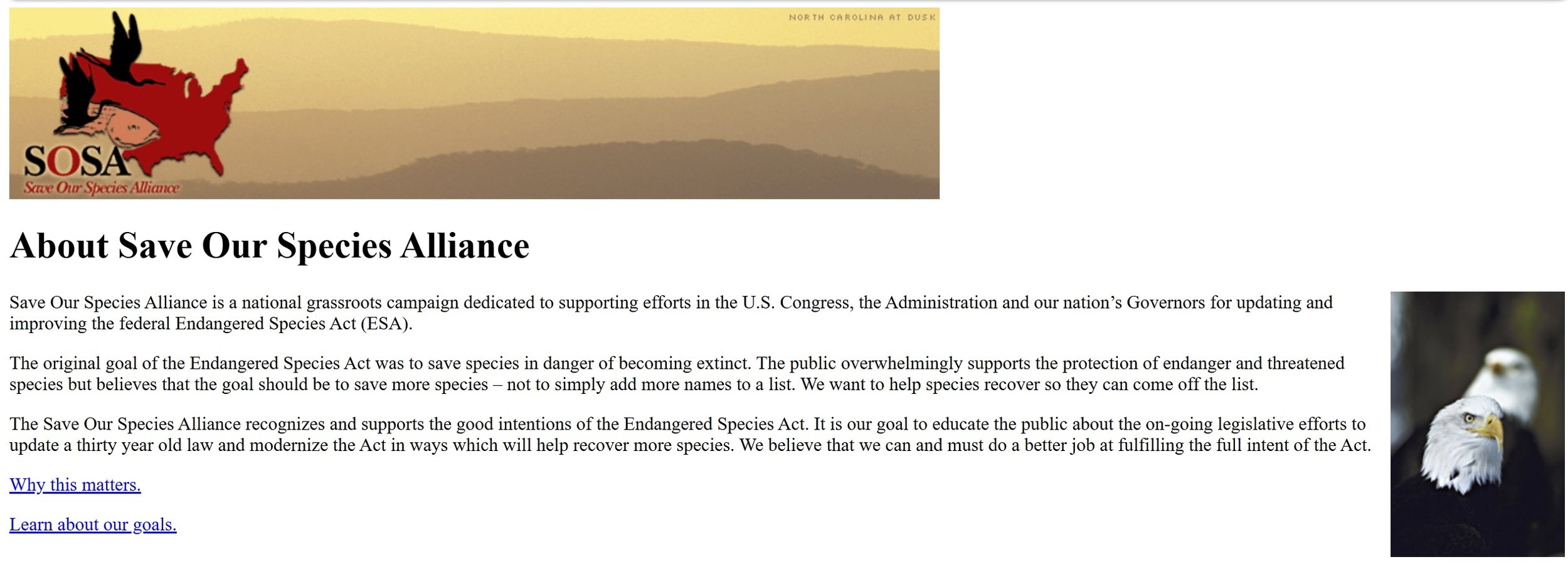
A classic example is the Save Our Species Alliance, which portrayed itself as a group focused on improving the Endangered Species Act to save more animals. In reality, the organization was run by a PR firm with lumber industry clients that wanted to gut the Endangered Species Act (you can read more about SOSA here).

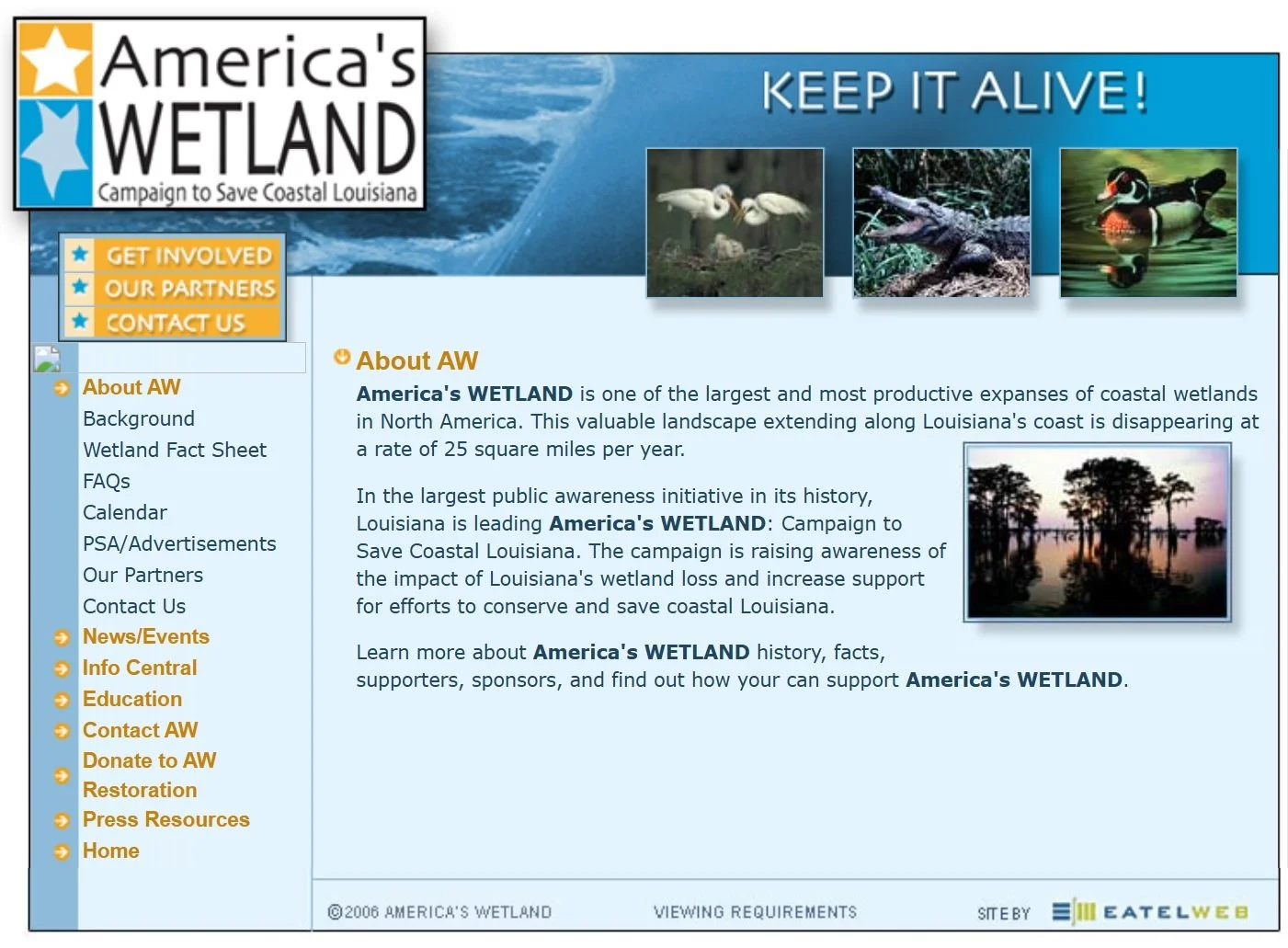
Screenshot of America’s WETLAND Foundation’s website captured on March 16, 2006. Source: https://web.archive.org/web/20060316061518/https://www.americaswetland.com/custompage.cfm?pageid=2

While many imitation environmentalist front groups are basically shell organizations – like the Save Our Species Alliance - some have physical locations and staff, which can make it even harder to identify their true motives. One example is the organization called America’s WETLAND Foundation (AWF).

AWF was founded in 2002 with funding from the oil industry, including Shell and BP. The organization got its start in 2001 as a project of former Louisiana Governor Mike Foster aimed at combatting coastal erosion. It was intended as a public awareness campaign to rally support for securing federal funding to cover the more than $14 billion needed to restore Louisiana’s coast. It became a fully independent organization in 2003.

For years, AWF walked the line between calling for wetlands restoration and advocating for fossil fuel extraction. Throughout their website, the economic importance of oil and gas and its ties to wetland areas is subtly mentioned alongside facts about the importance of wetland habitats. This can be seen in text from AWF’s FAQ section on their website in 2003:

“What will it cost to restore the wetlands?
Restoring coastal Louisiana will cost upwards of $14 billion, while it is estimated that the cost of inaction will amount to more than $100 billion in infrastructure alone.

How much oil and gas travels through America’s WETLAND?
One-fourth of all the oil and gas consumed in America and 80% of the nation’s offshore oil and gas travels through Louisiana’s wetlands.

What is the ecological significance of America’s WETLAND?
More than 95% of all marine species living in the Gulf of Mexico spend all or part of their life cycle in Louisiana’s wetlands. Further, Louisiana’s wetlands are the wintering habitat for millions of waterfowl and migratory birds whose habitat is lost as the wetlands disappear.”

AWF largely flew under the radar nationally until 2010 when it launched a campaign aimed at mobilizing Americans to demand that the US government fund the clean up of the BP Deepwater Horizon oil spill. On the surface, that sounds great – until you realize that the very company responsible for the oil spill is a major funder of the organization pushing for the government, i.e. taxpayers, to cover the costs of cleaning it up. The campaign fooled a lot of celebrities, most notably Sandra Bullock who pulled her support as soon as she learned of the organization’s oil industry ties.

The Chairman of AWF (before it shut down) was R. King Milling, who served as President and Vice Chairman of Whitney National Bank and Whitney Holding Corporation, which benefitted from the oil industry. In a speech that Milling gave at Loyola University New Orleans, he made his motives for wetlands restoration clear:

“Over 25% of oil and gas consumed by this country crosses the fragile ecosystem, and without its protection, the complex infrastructure, wells, thousands of miles of pipelines, compressor systems, holding tanks, all essential to delivery shall be at risk, for each structure and every mile of pipe located under that ecosystem was fabricated based upon the inherent protection afforded by our marsh and swamp.”

Miling and the AWF spent nearly two decades working to protect wetlands only to the extent that it benefitted the oil and gas industry while making the case that wetlands and fossil fuel extraction can coexist.

---

In all the cases I mentioned, the thing that stands out the most is the question of who benefits. When you see organizations pushing to block public policy that would safekeep the environment, or seeking to change existing regulations that protect the planet and human health, be suspicious. Look for the money trail. Often it will lead right to a corporation’s door.

When You Can't Trust the Research: Data Center Watch

One of the things I hate most about corporate front groups and their disinformation campaigns is how they make it harder for us to trust civil society organizations. Once you know that corporations create shells pretending to be nonprofits or other societal groups, it makes it difficult to trust what you see. As a researcher, I find the corporate front groups masquerading as research organizations to be especially egregious.

A recent example I stumbled across is a website called Data Center Watch. Here’s how they describe themselves:

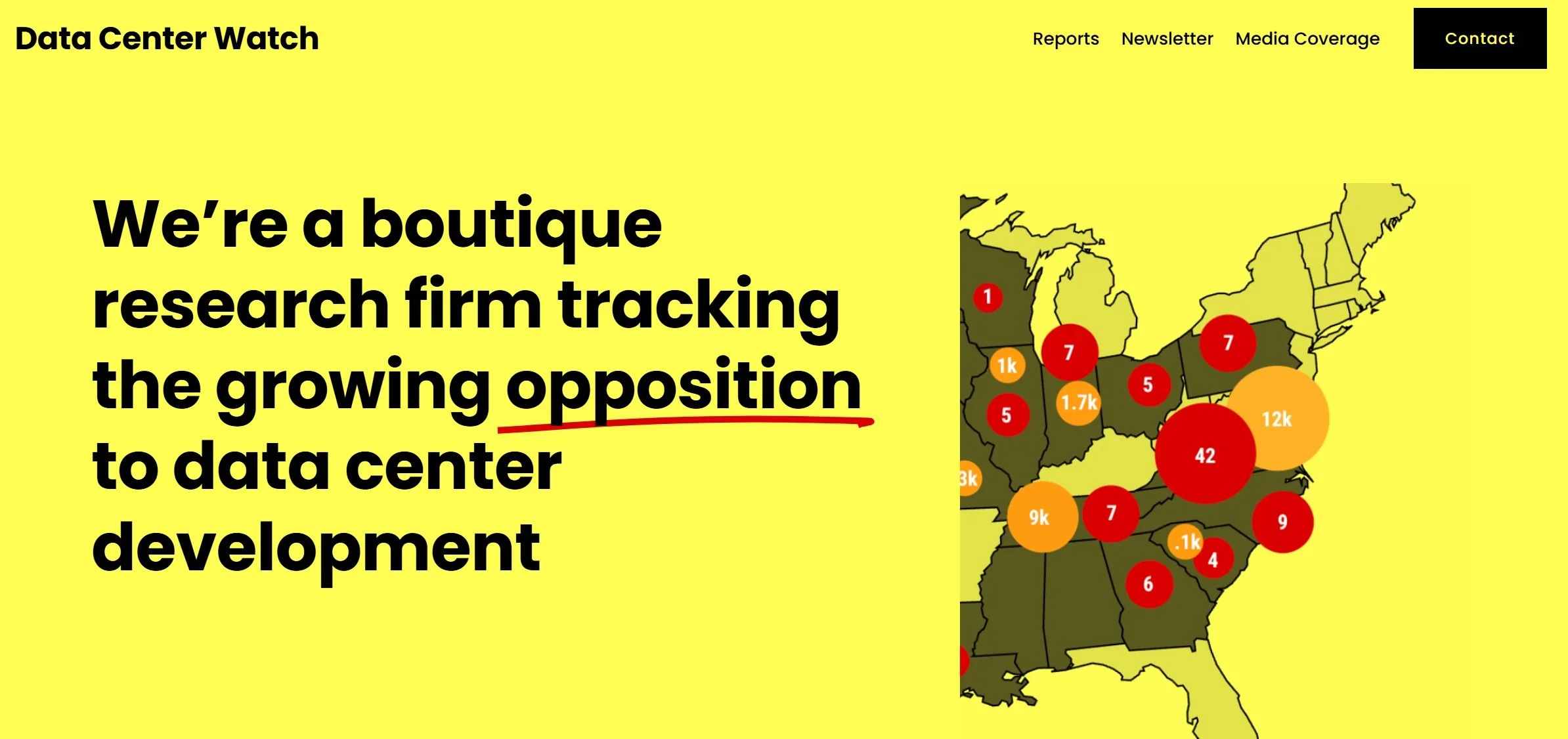
We’re a boutique research firm tracking the growing opposition to data center development”

And for most of the site’s existence, their entire “About Us” section was just this:

Data Center Watch tracks grassroots opposition to data center development across the United States. Our research is objective, fact-based, and nonpartisan.”[i]

Already, there are some red flags for me. Their website is a .org – which anyone can use, but a lot of people still think using .org means it’s a nonprofit organization. I’m guessing they knew that.

And while their website intro text describes them as a “boutique research firm,” their original about us description leaves much to the imagination. Nowhere on their website did they list the people running the organization or where their funding came from, as they did not appear to be selling anything. And the site itself looks more like it belongs in the sphere of civil society organizations and less like a corporate creation, using large black font on a yellow background with generous red pen underlining. Even the name – Data Center Watch – sounds like a watchdog group, not a boutique research firm with clients.

Main page of Data Center Watch’s website. Source: https://www.datacenterwatch.org/

It wasn’t until sometime after February of 2026 that Data Center Watch finally updated their About Us section to reflect who they really are: “a research project from 10a Labs.”

This change came long after several media outlets had revealed the company behind the website. Wired ran multiple articles, in June and November 2025, linking Data Center Watch to 10a Labs, as did numerous other news outlets. So it’s quite suspicious that they kept their ties to an AI security company hidden for so long.

Here’s what 10a Labs says they do:

“10a Labs is the safety and threat-intelligence layer trusted by frontier AI labs, AI unicorns, Fortune 10 companies, and leading global technology platforms. Our adversarial red teaming, model evaluations, and intelligence collection enable engineering, safety, and security teams to stay ahead of evolving threats and deploy AI systems safely.”

10a Labs has a financial incentive to create an atmosphere of fear – to make it seem like data centers are under constant threat from rabid activists that could cost them billions and billions of dollars. If we know this, we can use appropriate caution in reading Data Center Watch’s research reports. We can be suspicious.

This is why Data Center Watch hid who they are. And why 10a Labs created a front organization to publish their “research.” If 10a Labs released their findings that activists are derailing data center projects at an alarming rate, people would rightfully question their results and closely examine their methodology. But if a ragtag watch group doing research publishes the same findings, we might not be as cautious because we’re unaware there’s a significant conflict of interest involved.

Digging into the Research

So now that we know to be suspicious, let’s look at Data Center Watch’s first report:

Time frame: Right off the bat, I can’t find any solid information on what time period this study covers. The link to the report in their menu says “2023-Q1 2025” but it is never discussed or even mentioned in the report. There’s no explanation of how they chose the timeframe for the study, which means there is no discussion of what biases might be present by choosing this range of dates. Later in the report, they say that they have been tracking online petitions opposing data centers since 2022. Why are they including data center opposition for projects outside their timeframe?

Methodology: There is a methodology section, but it is only three sentences. The first says that they built “a database of activist activity and public officials involved in blocking or delaying development.” The second names a few types of sources. And that’s it. There is no detail as to how they actually collected their data or how they analyzed it. There is nothing here that can give us any trust that they haven’t just hand-picked cases that fit their narrative – and that’s a giant red flag. But what really disqualifies the findings of this report for me is this note that they include:

“This report highlights political risks and local opposition as frequent factors in data center project delays or cancellations, including community resistance, environmental concerns, and zoning issues. However, attributing delays exclusively to these factors oversimplifies a complex landscape. 

Data center projects are influenced by multiple intertwined elements—regulatory compliance, infrastructure readiness, utility availability, economic incentives, and broader market dynamics. Each project's circumstances must be individually assessed to fully understand the combination of forces causing delays or obstructions.”

They fully understand that they can’t isolate the effect of activism on data center project outcomes – that would take proper research skills. And yet, they present their findings as having done so anyway. Their subheading on the report says that “local activism threatens to derail the U.S. data center boom,” even though they know they can’t make that claim.

Findings: I could write an entire paper on everything wrong with their findings, but I will spare you that and just highlight a couple issues.

  • They state that there are “at least 142 activist groups across 24 states organizing to block data center construction and expansion.” They don’t show any data. They don’t explain how they came up with those numbers. I do social movement research, in addition to studying front groups, and I can tell you that it is LABORIOUS to collect this type of data. They’ve provided nothing that makes me believe they did the work needed to get these numbers.

  • They indicate that “a review of public statements by elected officials in districts with large data center projects (50 MW>) under consideration found that 55% of the politicians who had taken public positions against the data center projects were Republicans, and 45% were Democrats.” Who did the review? When was it published? There are no citations for anything in this report – another giant red flag.

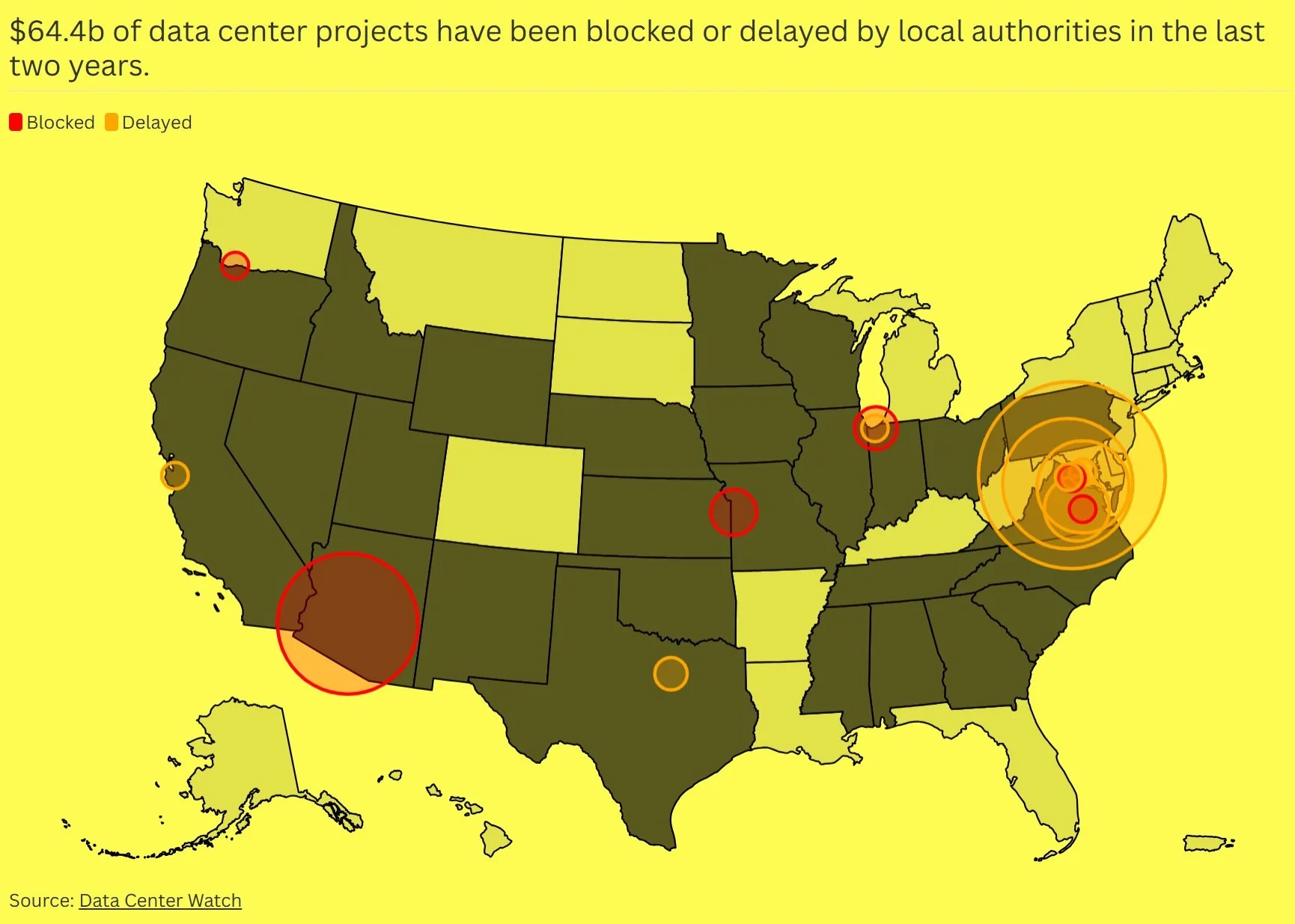
  • Perhaps the biggest issue is the data center projects themselves. I have little confidence that this is the full population of data center projects that were blocked or delayed during their nebulous time frame. Additionally, the report gives us no idea of what percentage of successful data center projects this subset represents. Their yellow map with the ominous orange and red circles certainly looks alarming, but we really have no idea how this compares to the number and cost of the data centers that were approved.

  • There’s also issues with double counting. For example, they count a project in Chesterton, IN as blocked and a project in Burns Harbor, IN as delayed. What they don’t tell us is that the projects are related: “On July 26, roughly six weeks after Provident withdrew its Chesterton proposal, neighboring Burns Harbor announced it had been approached by the company with a new plan.” Provident Realty shopped its project to multiple towns – they weren’t planning to build two different data centers. Which brings us to a related problem: companies building data centers will often hedge their bets and submit project plans to multiple locations. When a company withdraws its plans, it could be because another location was preferrable. But Data Center Watch gives the impression that all these withdrawals are due to activists.

Map of data center projects that have been blocked or delayed, according to a report by Data Center Watch. Source https://www.datacenterwatch.org/report

The Big Picture

Using skewed “research” to create favorable regulatory, cultural, or business environments for themselves is a favored tactic of firms. Unfortunately, they’ve figured out that they can hide a study’s bias by having a third party present it – often a corporate front group. I’ll cover more examples of this in the future, including the tactic of using scientists-for-hire. In the meantime, whenever you see research from an organization you don’t know and trust, always ask yourself: Who benefits from this?


[i] https://web.archive.org/web/20250514100414/https://www.datacenterwatch.org/

Disinfonation: How Corporations Shaped America

Fake organizations secretly controlled by corporations are manipulating our political system and reshaping our culture.

It sounds like a conspiracy theory. But what if I told you it’s true?

They’re called corporate front groups: Civil society organizations that are formed, funded, or co-opted by companies to advance their interests while hiding their ties to industry. They can take the form of any type of organization or group found in civil society, such as membership organizations, research institutes, issue advocacy groups, or even social movements. That last type you’ve probably heard referred to as “astroturf” – fake grassroots activism.

I’ve been researching corporate front groups for almost fifteen years, ever since I first stumbled upon them while working on my dissertation. I was studying activism around renewable energy and electricity companies’ efforts to block the passage of renewable energy mandates. I kept coming across activist groups opposing renewable energy – what I thought was a countermovement.

But something seemed off.

That’s when I started digging into the paper trail. These groups had financial ties to the energy industry. Even more interestingly, they didn’t seem to have any actual members. And their addresses were often the same as the companies supporting them, or public affairs and public relations firms serving as an intermediary.

They were basically shell organizations intended to give the impression of broad, public opposition to renewable energy. In reality, they were just an extension of the industry they were protecting.

This discovery sent me on an investigative deep dive to better understand what corporate front groups are, what they do, and how they impact US society.

What are corporate front groups?

The simplest answer is that they’re organizations that advocate for industry or corporate interests in areas where it would be very unpopular or seen as self-interested if companies did it themselves - all done while hiding their industry ties.

Let’s look at an example:

About Us page from the Save Our Species Alliance website, captured by the Wayback Machine on August 30, 2006

The Save Our Species Alliance (SOSA) was founded in 2004 and described itself as a “national grassroots campaign” focused on “updating and improving the federal Endangered Species Act” to “help species recover so they can come off the list.”[i] Their logo featured several types of wildlife and their website showcased a picture of a bald eagle – the poster child of endangered species in the US. By all accounts, it seemed like a legitimate environmental advocacy group.

But when you peel back the layers, a different story emerges.

SOSA’s director was Tim Wigley, who was also Vice President of Pac/West Communications. Before that position, Wigley was president of the Oregon Forest Industries Council, “a Salem-based, statewide trade association representing the interests of Oregon’s forest products industry.”[ii] And before that position, he served as the West Coast Director of Corporate Communications for Georgia-Pacific Corporation, a Koch, Inc. company that is a major forest products producer. If his prior work in the forestry industry doesn’t set off enough alarm bells, many of Pac/West Communications’ clients are major users of forestry products – like builders – as well as other corporate front groups.

Ralph Nader’s Public Citizen, a non-profit consumer advocacy organization, said this about SOSA:

“The Save Our Species Alliance, an entity that sought to gut the Endangered Species Act, is a particularly Orwellian example of a group’s name suggesting the opposite of its true goals.”[iii] 

Why does this type of deception work?

If a lumber company lobbied Congress to roll back the Endangered Species Act (ESA), it would be easy to identify the clear conflict of interest. Of course a lumber company would want to weaken or eliminate the ESA. Whenever an endangered species is found in a forest, that forest can’t be harvested for lumber because of ESA protection, which hurts the profits of the lumber industry. Anyone who cares about environmental issues would not take a lumber company’s efforts to change the ESA seriously.

This is where the power of corporate front groups comes in.

An environmental advocacy organization that claims to protect endangered species has a much better chance of being heard if it advocates for changes to the Endangered Species Act than a lumber company would. The conflict of interest is hidden – consumers and lawmakers would need to rely on their knowledge of the ESA and have a deep understanding of how changes to it would impact endangered species’ outcomes to decide whether SOSA’s efforts were legitimate. Unfortunately, most people don’t have that level of expertise.

Additionally, non-profit organizations are one of the most trusted types of institutions in the US. We don’t tend to question their legitimacy – and corporate front groups bank on that.

What comes next?

If you want to learn more about corporate front groups – what they are, what they do, and how they have impacted American culture and politics – you’ve come to the right place!

I started this blog to put my research out into the world in a way that is accessible for those of us without access to expensive academic journals and books. I’ll be writing a combination of posts that do broad overviews on corporate front groups, as well as some deep dives into individual organizations and the impacts they’ve had. I’ll also cover ways we can be savvier about identifying corporate front groups and corporate disinformation campaigns.

I’ve developed a database of more than 300 corporate front groups, and I’m always adding to it. If you know of any organizations that you think might be a front for industry interests, comment below and I’ll take a look.


[i] https://web.archive.org/web/20060830031821/http://www.saveourspeciesalliance.org/cgi-bin/display.cgi?page=aboutus

[ii] https://web.archive.org/web/20040901110059/http://www.pacwestcom.com/staff/wigley.htm

[iii] https://www.citizen.org/wp-content/uploads/organizing-astroturf.pdf